

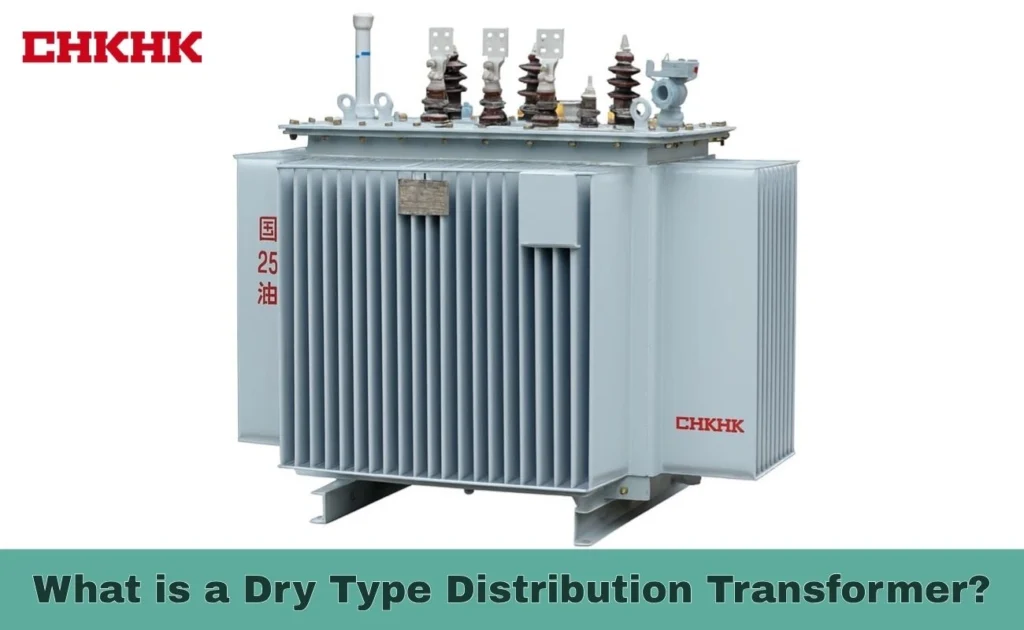
What is a dry type distribution transformer? It is a power transformer that uses solid insulation and air – not oil – to cool its windings, making it the standard choice for indoor power distribution, The global market for these units is projected to reach USD 16.33 billion by 2030, driven by growing demand for fire-safe, low-maintenance electrical infrastructure worldwide.
What is a dry type distribution transformer ?
What is a dry type distribution transformer in terms of construction? It steps medium voltage down using epoxy resin or aramid paper insulation, cooled by natural or forced air, For engineers asking what is a dry type transformer in terms of structure: laminated silicon-steel core, resin-treated windings, and a ventilated enclosure – no flammable liquid involved – enabling installation directly inside occupied buildings.
advantages of dry type transformers
Understanding what are dry type transformers capable of requires reviewing their core advantages:
- No fire risk: Flame-retardant solid insulation – no flammable liquid
- Zero environmental hazard: No oil spill or groundwater risk
- Low maintenance: No oil testing or replacement needed
- Indoor flexibility: Basement, mid-floor, or beside switchgear
- High efficiency: DOE-2016-compliant units reach up to 99.5%
- Long service life: Typically 20–30 years under normal conditions
Read More : Causes of Transformer Oil Leakage : A Technical Guide to Prevention
Main types of dry type transformers
Knowing what are the types of transformers in this range ensures the right match for each environment, Understanding what are the 3 types of transformers in the dry type category:
- VPI: Varnish-impregnated open coils – lower cost, best for clean dry indoor use
- Cast Resin: Epoxy-encapsulated coils certified to IEC 60076-11 classes C2/E2/F1 – ideal for harsh or outdoor environments
- Sealed / VPE: Multiple dip-and-cure cycles for higher dielectric strength in sealed enclosures
Where are dry type transformers commonly used
Understanding what is the type of transformer needed starts with the installation environment, What is a dry type distribution transformer suited for? These units are deployed in:
- Commercial buildings: Offices, malls, hotels
- Healthcare and education: Hospitals, labs, schools
- Data centers: Fire safety and DOE-2016 efficiency required
- Transport: Metro tunnels, airports, marine vessels
- Renewable energy: Wind, solar, and battery storage
- Industrial: Mines, chemical plants, offshore (C2/E2/F1)
Read More : Components Of Substation and Their Functions
Guide to Dry Type Transformer Installation
Key installation steps for what is a dry type distribution transformer per IEEE C57.12.01-2020:
- Pre-installation inspection: Verify unit integrity; check insulators and desiccant
- Site selection: Clean, ventilated room; min, 305 mm clearance from walls
- Foundation and mounting: Level pad; release shipping bolts to activate isolation pads
- Grounding: Independent grounding of enclosure, core, and neutral per local code
- Electrical connections: Match primary taps to supply voltage; torque per manufacturer spec
- Vibration isolation: Rubber pads and flexible conduit to prevent noise transfer
- Pre-energization testing: Insulation resistance and induced-voltage tests before energizing
Read More : Top Power Distribution Transformer Manufacturers | Chkhele
the difference between VPI and cast resin transformers
Both VPI and cast resin are what is a dry transformer technologies – but their insulation process drives very different performance and cost profiles:
| Feature | VPI | Cast Resin |
| Insulation method | Varnish-impregnated open coil | Fully epoxy-encapsulated solid coil |
| Moisture resistance | Moderate | Excellent |
| Environment | Clean indoor spaces | Harsh / outdoor / chemical |
| Repairability | Limited field repair | Full coil replacement required |
| Relative cost | Baseline | ~50% higher than VPI |
Choose VPI for clean, controlled indoor environments; choose cast resin when conditions are harsh, humid, or outdoor.
Compare between dry type transformer and oil filled transformers
The choice between a what is a dry type distribution transformer and an oil-filled unit comes down to location, fire-risk tolerance, and total lifecycle cost, The global dry type transformer market is projected to reach USD 16.33 billion by 2030 (Grand View Research, 2024):
| Criterion | Dry Type | Oil-Filled |
| Fire risk | Very low – no flammable liquid | Requires containment pits and suppression |
| Maintenance | Minimal – inspections only | Periodic oil testing and replacement |
| Indoor installation | Yes – no special civil works | Restricted – oil bunding required |
| Efficiency | Up to 99.5% (DOE-2016) | Slightly higher at very large MVA |
| Upfront cost | Higher | Lower |
| Lifecycle cost (indoor) | Lower – no oil infrastructure | Higher – civil and compliance costs |
For indoor, mission-critical, and fire-sensitive applications, dry type consistently delivers better safety, compliance, and lifecycle value.
In summary, what is a dry type distribution transformer best suited for? Any application where fire safety, low maintenance, and indoor installation flexibility are non-negotiable.
Noise Mitigation Techniques for dry type transformer
Any what is a dry type distribution transformer installation hums from core magnetostriction – typically 55–65 dB(A) at 1 meter for 500–1000 kVA units. Effective reduction works on three levels:
Design: Low-loss grain-oriented silicon steel or amorphous alloy cores – step-lap construction and resin-encapsulated windings to damp vibration and coil rattle.
Installation: Rubber or neoprene isolation pads beneath the unit – flexible conduit connections to prevent vibration transfer.
Room: Acoustic wall and ceiling treatment – fan silencers for forced-cooled (AF) units.
Read More : Gas Insulated Switchgear Maintenance Procedures
dry type transformer Integration with Smart Grid Technologies
Modern what is a dry type distribution transformer deployments go beyond passive conversion, Specifying what is the type of transformer for smart grid integration means choosing what is a dry transformer with built-in digital capabilities:
- Real-time monitoring via temperature, load, and partial discharge sensors
- IEC 61850 / Modbus / DNP3 communications to SCADA and cloud platforms
- AI-driven predictive maintenance to forecast insulation aging
- Digital twin models for benchmarking and anomaly detection
- On-load tap changers with remote control for renewable energy voltage regulation
The transformer monitoring segment is projected to reach USD 3.7 billion by 2028, driven by IoT and smart grid adoption worldwide.
Why Chkhele’s dry type transformers are the best
Chkhele engineers what is a dry type distribution transformer solutions for the world’s most demanding applications, For customers asking what are dry type transformers capable of at the highest tier – every Chkhele unit delivers:
- IEC 60076-11 C2/E2/F1 certification: Highest international standard for climatic, environmental, and fire performance
- Smart Grid readiness: Integrated monitoring ports and IoT-compatible communications built in as standard
- DOE-2016 energy efficiency: Minimizing energy losses and reducing long-term operating costs
- Full lifecycle support: Installation, commissioning, and predictive maintenance included
When reliability, safety, and long-term value define the requirement – Chkhele delivers, Contact our team to specify the right unit for your project.
FAQ
Can dry type transformers be installed outdoors?
Yes, with a weather-rated enclosure (IP54, IP65, or NEMA 4), Cast resin – one of the what are the 3 types of transformers dry type categories – is widely deployed in outdoor, coastal, and extreme environments.
What are the fire safety benefits of dry type transformers?
Knowing what are the types of transformers in the dry category clarifies why: epoxy insulation is self-extinguishing, produces minimal smoke, and eliminates oil containment pits indoors.
How long is the typical lifespan of a dry type transformer?
Typically 20–30 years, Well-maintained units with proper ventilation reliably exceed 35 years of service.
Are dry type transformers more expensive than oil filled?
Yes, at purchase, However, what is a dry type distribution transformer total cost of ownership is lower for indoor applications, This is why specifying what is a dry type transformer for mission-critical use consistently delivers better lifecycle value.
