

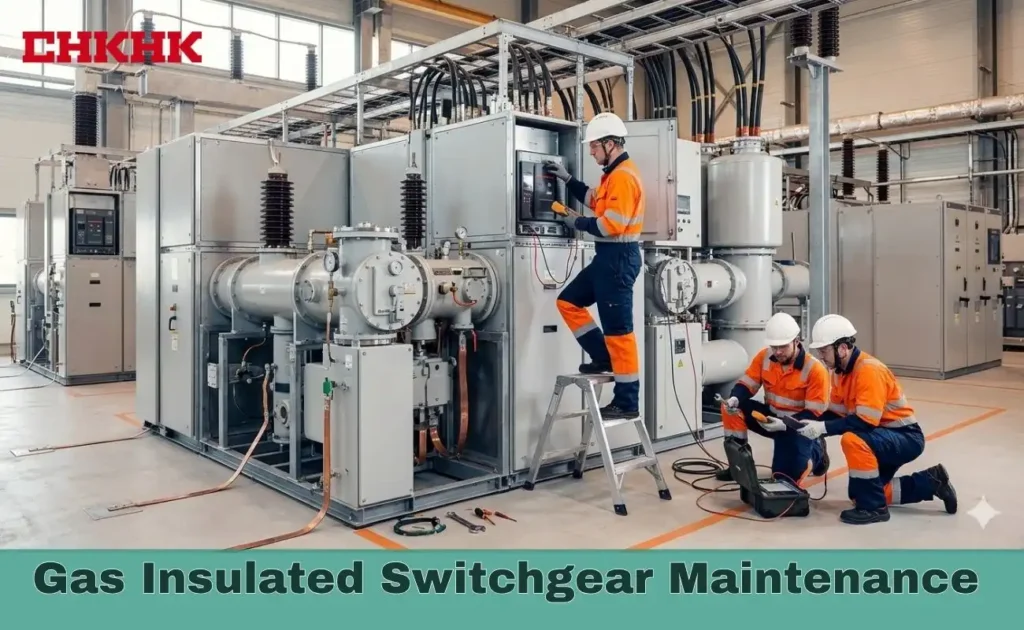
Gas insulated switchgear maintenance is essential for any high-voltage power system designed to deliver long-term reliability. GIS units are built for a service life of 30 to 40 years, but reaching that lifespan depends entirely on structured inspection routines and proactive servicing. Without a consistent maintenance program, even the most advanced GIS installation is vulnerable to failures that are costly, disruptive, and preventable.
What is Gas Insulated Switchgear?
Gas insulated switchgear is a sealed, metal-enclosed electrical assembly that uses SF6 gas as its primary insulating medium. All live components are housed within pressurized aluminum compartments, protecting them from dust, moisture, and environmental contaminants.
According to Liyond, GIS equipment volume is typically 60% to 90% smaller than traditional air-insulated switchgear , making it the preferred solution for urban substations, offshore platforms, high-rise buildings, and space-constrained industrial facilities.
Importance of Gas Insulated Switchgear Maintenance for Grid Reliability
A structured gas insulated switchgear maintenance program is a grid reliability requirement, not an optional measure. GIS is widely regarded as low-maintenance equipment, but consistent performance depends on strict adherence to inspection protocols.
Neglecting maintenance leads to:
- Unplanned outages with significant operational and financial consequences
- SF6 gas leakage , carrying serious environmental risk, given SF6’s global warming potential of nearly 24,000 times that of CO2
- Accelerated insulation and mechanical degradation
- Non-compliance with IEC 62271-203 safety and performance standards
Read More : Combiner Box vs. Junction Box | A Guide to Solar Safety
Key Components of GIS That Require Regular Inspection
Effective gas insulated switchgear maintenance begins with identifying which components carry the highest failure risk. Each element plays a specific role in system integrity.
Components requiring priority inspection:
- Circuit breakers , subject to contact erosion and mechanical wear across switching cycles
- Disconnectors , inspected for alignment and mechanical condition; provide physical isolation for safe maintenance access
- Earthing switches , ground conductors after isolation; critical for personnel safety during servicing
- Bus bars , monitored for partial discharge activity and gas compartment integrity
- Current and voltage transformers , tested for measurement accuracy and insulation condition
- SF6 gas compartments , checked for pressure levels, moisture content, and seal leakage
Read More : Choosing Combiner Boxes For Solar System | Chkhele Guide
Common Failure Modes in Gas Insulated Switchgear Units
Understanding how GIS units fail allows maintenance teams to prioritize diagnostics at the right intervals. The most frequently recorded failure modes are:
- SF6 gas leakage , the leading cause of GIS degradation; detected through pressure monitoring and high-precision leak detectors
- Moisture ingress , compromises insulation and accelerates formation of toxic SF6 by-products
- Partial discharge activity , internal defects that escalate into full insulation breakdown if undetected
- Mechanical wear , particularly in circuit breaker drive systems after high switching cycle counts
- Contact degradation , gradual erosion reduces breaker interrupting capacity over time
Read More : Low Voltage Switchgear Products
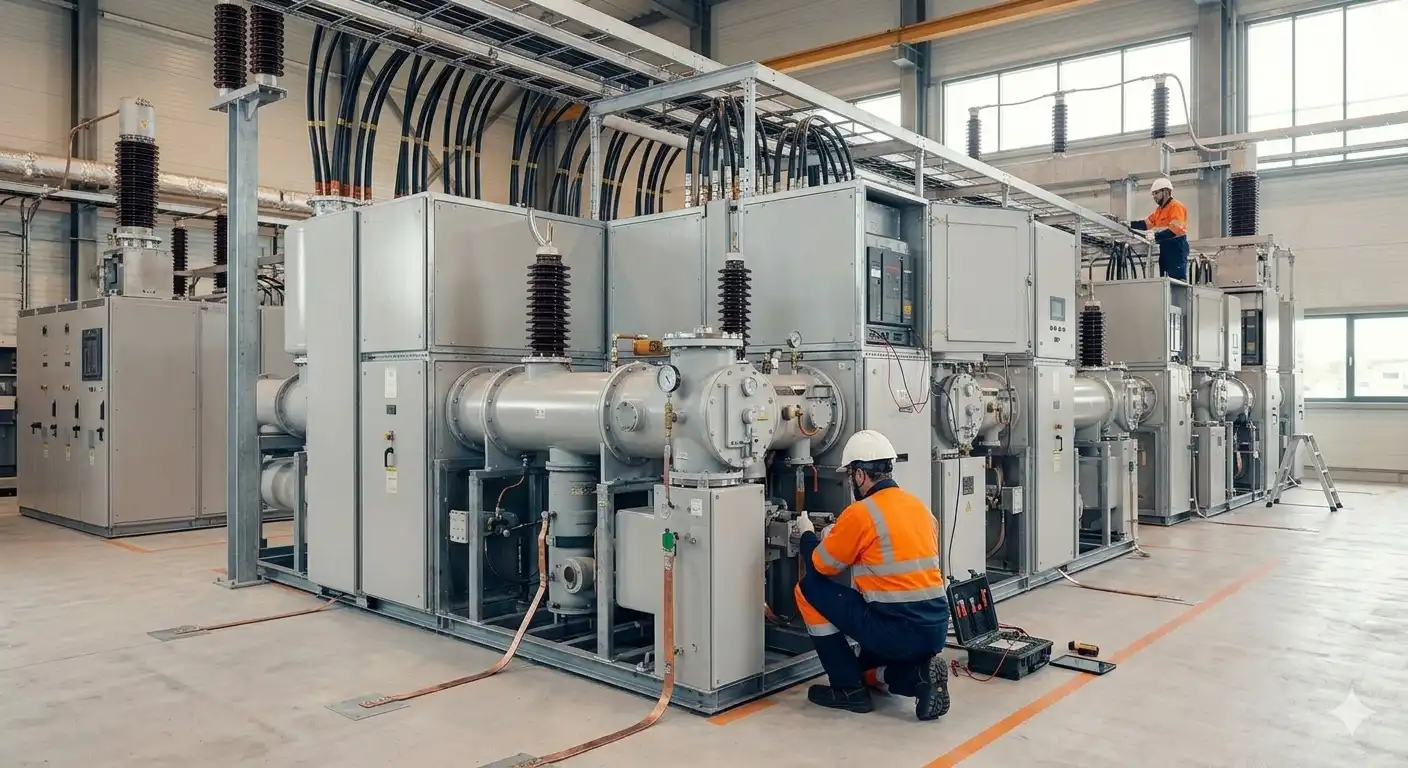
Electrical Testing Procedures for Gas Insulated Switchgear Breakers
Electrical testing forms the diagnostic core of any gas insulated switchgear maintenance program. All procedures must be carried out by qualified engineers following IEC and IEEE standards.
Contact Resistance Measurement
Identifies wear or contamination on breaker contacts. Elevated resistance readings indicate the need for inspection or replacement before performance is affected.
Insulation Resistance Testing
Detects moisture ingress or material degradation across insulation interfaces. A drop in values serves as an early warning of developing faults.
Partial Discharge Testing
Locates internal defects within gas compartments before failure occurs. It is one of the most sensitive diagnostic tools available for GIS condition assessment.
Circuit Breaker Timing Tests
Verify that opening and closing operations meet manufacturer specifications. Timing deviations point to wear in the operating mechanism or control circuit issues.
Read More : Metal-Clad Switchgear vs Metal-Enclosed
Best Practices for Moisture and Purity Testing of SF6 Gas
SF6 gas condition directly determines the insulating and arc-quenching performance of any GIS installation. Degraded gas is among the most common contributors to premature equipment failure.
Recommended practices include:
- Measuring dew point using certified analyzers to detect moisture within gas compartments
- Testing SF6 purity to identify contamination from arc decomposition by-products
- Recording gas density readings against manufacturer alarm and lockout thresholds , if pressure drops to lockout level, the affected bay must be immediately de-energized
- Reclaiming or replacing gas below acceptable purity standards using approved handling equipment
- Documenting all measurements with compartment references for long-term trend analysis
Routine SF6 monitoring is both a maintenance obligation and an environmental compliance requirement under IEC 62271-203.
Why Chkhele is the Best Manufacturer of Gas Insulated Switchgear
Chkhele designs gas insulated switchgear built for extended service life, minimal maintenance intervals, and full compliance with international standards. Their units support condition-based maintenance programs , giving operators the monitoring infrastructure needed to move from reactive repairs to predictive servicing. With technical support available across global markets, Chkhele delivers the manufacturer-level expertise that complex GIS installations demand.
FAQ
How often should GIS maintenance be performed?
Routine visual inspections are recommended at least twice a year, with critical systems requiring quarterly checks. Full diagnostic assessments , covering electrical testing and SF6 gas analysis , are typically conducted every one to three years, depending on operating conditions and manufacturer O&M guidelines.
Why is SF6 gas monitoring critical in GIS maintenance?
SF6 is the primary insulating and arc-quenching medium in GIS equipment. Any drop in gas pressure, increase in moisture content, or reduction in purity directly compromises the system’s ability to insulate live components and interrupt fault currents safely. Regular gas analysis prevents minor leakage from developing into a critical failure.
What are common diagnostic tests used in GIS maintenance?
Standard diagnostics include partial discharge measurement, contact resistance testing, SF6 gas purity and moisture analysis, insulation resistance testing, and circuit breaker timing analysis , all performed in accordance with IEC 62271-203 and manufacturer specifications.
