

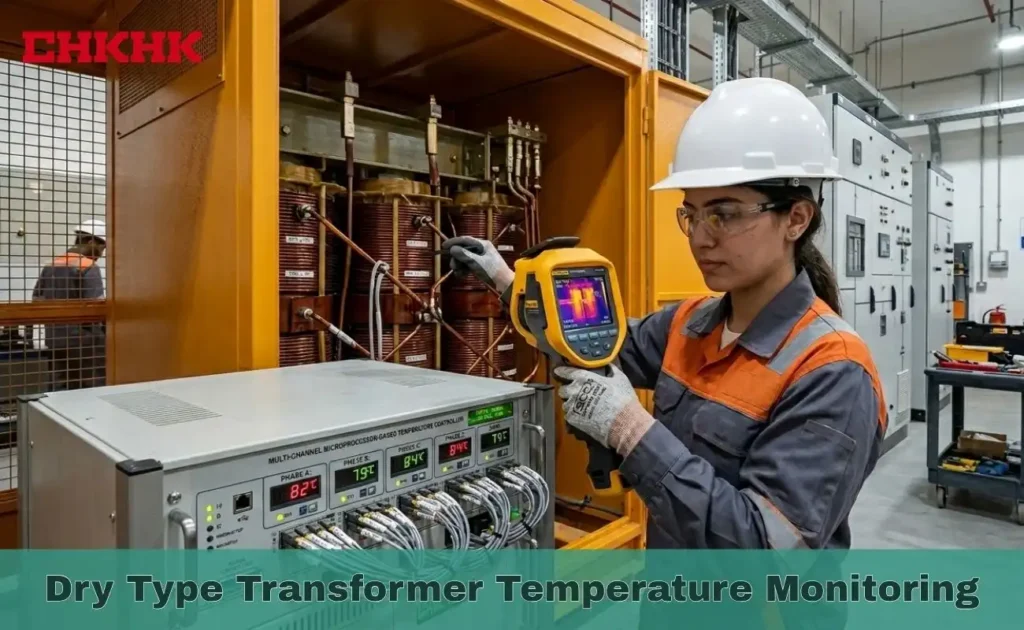
Dry type transformer temperature monitoring is the first line of defense against overheating failures in modern power systems, Unlike oil-filled units, dry type transformers rely entirely on air cooling – making real-time thermal oversight critical for safe, uninterrupted operation across industrial and commercial installations.
What Means Transformer Temperature Monitoring
Transformer temperature monitoring is the continuous measurement and tracking of thermal conditions inside a transformer’s windings and core, It detects dangerous heat buildup before it causes irreversible insulation damage.
Three parameters define any effective monitoring setup:
- Winding hot-spot temperature – the highest thermal point inside the coil
- Ambient temperature – surrounding air temperature affecting cooling efficiency
- Temperature rise – difference between winding and ambient, measured against insulation class limits
According to the IEC 60076-11 standard, dry type transformers must comply with defined temperature rise limits based on their insulation class to ensure safe service life.
Find Our transformers : SCB18-NX1 Dry Type Distribution Transformer
dry type transformer temperature monitoring Technologies
Modern facilities use several proven technologies to track thermal conditions continuously, Each suits different voltage levels, environments, and budget requirements:
- Resistance Temperature Detectors (RTDs): Embedded in windings for precise dry type transformer winding temperature readings; accuracy within ±1°C
- Thermistors (NTC/PTC): Cost-effective sensors placed at hot-spot locations; trigger alarms at preset thresholds
- Fiber Optic Sensors: Immune to electromagnetic interference; ideal for high-voltage enclosures requiring continuous transformer temperature monitoring
- Infrared Thermal Cameras: Non-contact scanning during live operation; detects surface anomalies instantly
- Embedded Microprocessor Controllers: Integrate sensor data into a complete transformer temperature monitoring system with SCADA connectivity and remote alerts
Read More : Protection of Transformer in Power System :A Complete Guide
dry type transformer temperature monitoring components
A complete dry type transformer temperature monitoring setup requires several integrated components working together, Each plays a specific role in the detection and response chain:
- Temperature sensors (RTDs or thermistors) embedded at winding hot-spots
- Signal conditioning unit that converts raw sensor output to readable values
- Display and control unit showing real-time winding and ambient temperatures
- Alarm relay outputs set at warning and trip thresholds
- Data logger recording temperature trends over time
- Remote communication module (RS485, Modbus, or SCADA interface) for centralized monitoring
Read More : How to Find Transformer Rating ?
Managing Overload Conditions Through Effective Dry Type Transformer Temperature Monitoring
Overload conditions are among the most common causes of accelerated insulation aging in dry type transformers, Effective dry type transformer temperature monitoring allows operators to detect and respond before damage occurs.
A three-tier response protocol keeps operations safe during overload events:
| Tier | Condition | Action |
| Warning | 10°C below trip threshold | Log event, notify maintenance |
| Alarm | 5°C below trip threshold | Reduce load immediately |
| Trip | Insulation class maximum reached | Automatic shutdown |
Standard insulation class thermal limits for reference:
- Class F: Maximum winding temperature 155°C.
- Class H: Maximum winding temperature 180°C.
- Class C: Maximum winding temperature 220°C.
Research published in Energies (MDPI) confirms that continuous monitoring combined with predictive load management extends transformer service life by 15–20 years beyond standard design expectations.
Read More : What is a Dry Type Distribution Transformer ?
Advantages of Transformer Temperature Monitoring
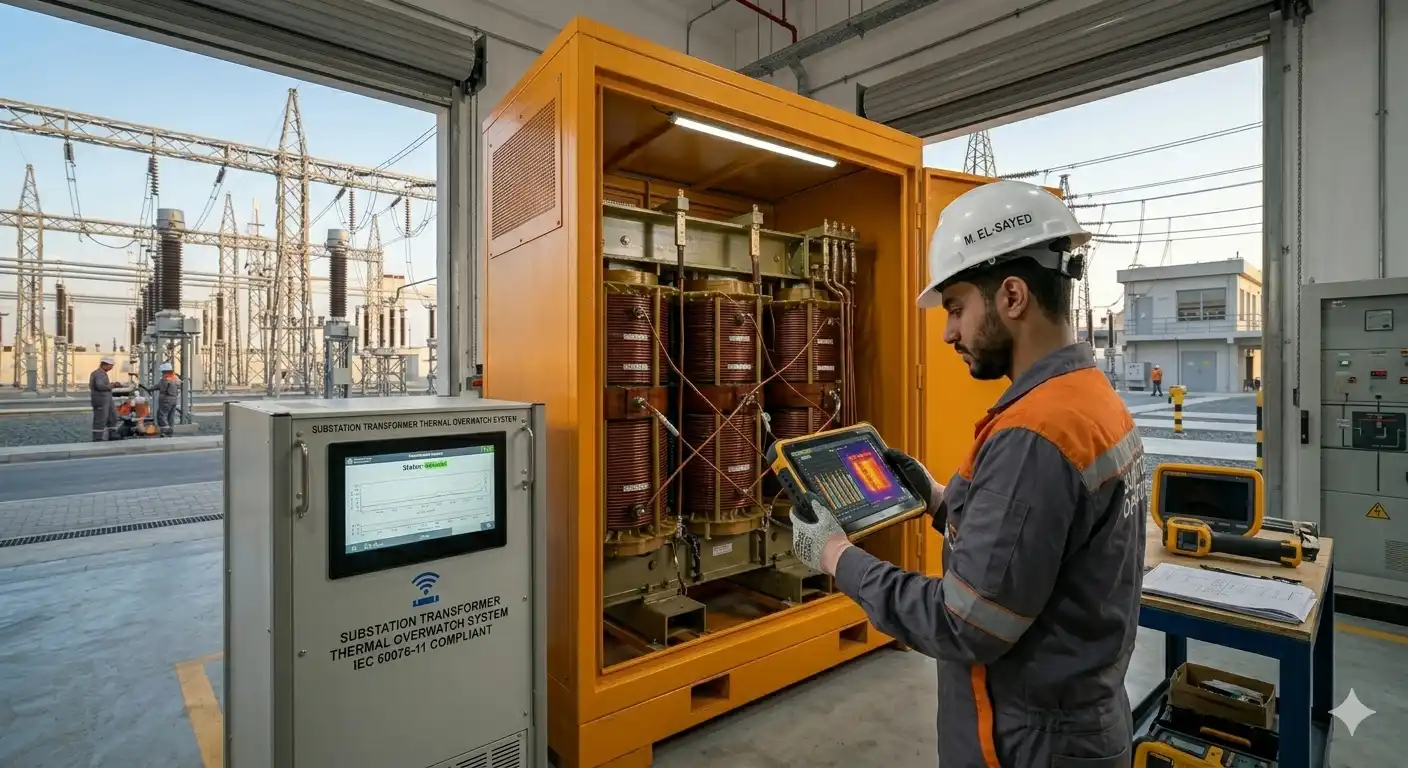
Implementing a dedicated transformer temperature monitoring system delivers measurable operational and financial benefits, The return on investment becomes clear when compared against the cost of unplanned failures.
Key advantages include:
- Extended insulation life – every 10°C reduction in operating temperature doubles insulation lifespan per the Arrhenius aging model
- Early fault detection – thermal anomalies are identified weeks before mechanical failure
- Reduced downtime – planned maintenance replaces emergency repairs
- Load optimization – real-time data supports safe dynamic loading decisions
- Compliance assurance – meets requirements of IEC 60076-11 – the international standard governing dry type transformer performance and thermal limits
The oil temperature of transformer in oil-filled units follows similar monitoring principles, with the maximum temperature of transformer oil capped at 95°C top-oil and transformer oil temperature range typically between 40°C and 85°C under normal load – a useful benchmark when comparing technologies.
The Dangers of Ignoring Transformer Temperature Monitoring
Operating a dry type transformer without proper transformer temperature monitoring exposes facilities to serious technical and financial risks, Thermal faults rarely announce themselves until significant damage has already occurred.
Critical dangers of unmonitored operation include:
- Insulation degradation – sustained overtemperature irreversibly damages winding insulation, with no recovery possible
- Partial discharge escalation – heat accelerates breakdown of air gaps in winding insulation
- Catastrophic failure – undetected hot-spots can lead to winding burnout and complete transformer loss
- Fire risk – dry type transformers in enclosed spaces face elevated fire hazard from uncontrolled thermal runaway
According to research published in Applied Thermal Engineering (ScienceDirect), winding insulation failure – primarily driven by thermal aging – is responsible for nearly 30% of transformer failures, making temperature monitoring a direct line of defense against the leading cause of transformer loss.
Discover Chkhele’s Dry Type Transformers
Chkhele dry type transformers are engineered with integrated temperature monitoring as standard – not an afterthought, Every unit ships with embedded RTD sensors, alarm and trip relay outputs, and full SCADA compatibility for seamless integration into modern power management systems.
Whether you’re specifying for an industrial facility, data center, or renewable energy installation, Chkhele’s thermal monitoring solutions deliver the reliability your operation demands, Contact the Chkhele technical team today to find the right transformer and monitoring configuration for your specific load profile and environment.
FAQs
Why is dry type transformer temperature monitoring essential for power systems?
Without monitoring, thermal faults go undetected until insulation fails catastrophically,Real-time temperature data prevents unplanned outages and protects transformer investment.
Why is temperature monitoring more critical for dry type transformers than oil-filled ones?
Dry type transformers have no oil buffer to absorb or redistribute heat, Overheating directly and immediately degrades winding insulation, leaving no margin for error.
Is remote dry type transformer temperature monitoring possible?
Yes, Modern systems use Modbus, RS485, or cloud-based SCADA interfaces to deliver real-time winding temperature data to any location globally.
