

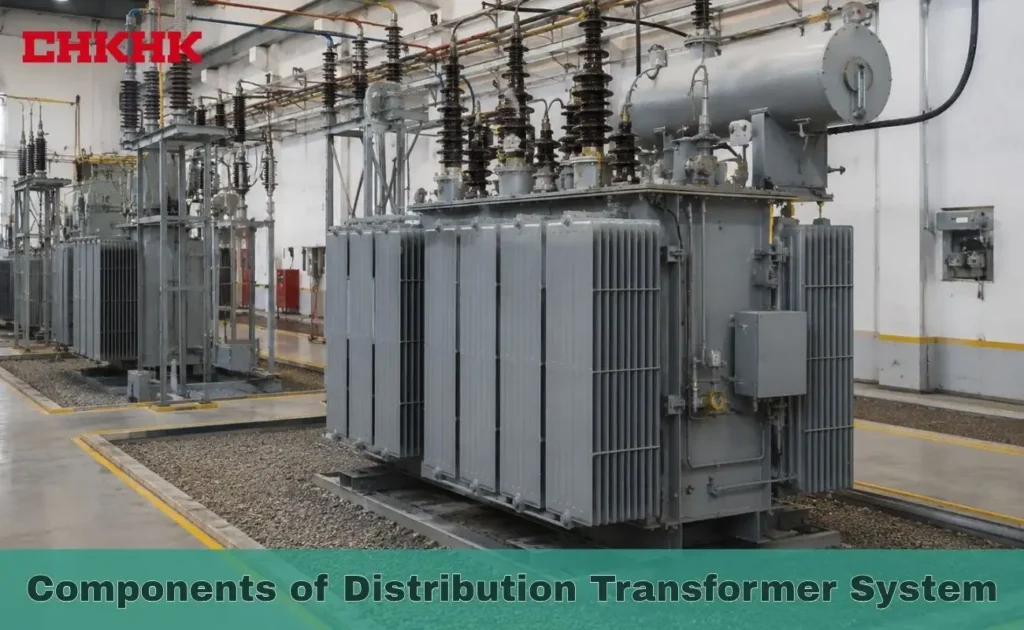
Components of distribution transformer systems are the foundation of safe, efficient power delivery across residential, commercial, and industrial networks worldwide, Every distribution transformer relies on a precisely coordinated set of active and passive parts from the magnetic core and copper windings to the conservator tank, Buchholz relay, and tap changer, Understanding the role of each component enables engineers to specify the right unit, diagnose faults early, and extend service life, This guide covers every critical element in detail, from basic function to real-world failure modes and selection criteria.
What Are Components of Distribution Transformer
The components of distribution transformer units fall into two main groups: active parts that participate directly in energy transfer, and passive parts that protect, cool, and regulate the transformer in service.
Active components:
- Core: Laminated silicon steel stack providing the magnetic flux path; minimizes eddy current and hysteresis losses
- Primary winding: Receives high-voltage input; copper or aluminum conductor insulated with paper or resin
- Secondary winding: Delivers stepped-down output voltage to the distribution network
Passive and protective components:
- Tank: Welded steel enclosure housing the active parts and insulating oil
- Bushing: Insulated terminals allowing HV/LV connections through the tank wall without flashover risk
- Conservator tank: Sealed expansion vessel that accommodates oil volume changes as operating temperature fluctuates
- Radiators: Corrugated or panel-type fins that dissipate heat from the oil to ambient air
- Buchholz relay: Gas-actuated protection device detecting internal faults before they escalate
- Tap changer: Mechanism adjusting the winding turns ratio to maintain rated output voltage under varying load
According to IEC 60076-1, all distribution transformer components must meet defined insulation class, temperature rise, and short-circuit withstand requirements.
Read More : Effective Dry Type Transformer Temperature Monitoring Systems
The Role of Components of Distribution Transformer
Each of the distribution transformer components performs a distinct function that cannot be substituted, The table below summarizes primary roles across the assembly:
| Component | Primary Function |
| Core | Magnetic flux path; low-loss energy coupling between windings |
| Windings | Electromagnetic energy transfer across voltage levels |
| Insulating oil | Dielectric insulation and heat transfer medium |
| Conservator tank | Oil expansion management; moisture exclusion |
| Bushings | Safe HV/LV termination through tank wall |
| Tap changer | Output voltage regulation under load variation |
| Buchholz relay | Internal fault alarm and trip initiation |
| Radiators | Thermal control within insulation class limits |
The distribution transformer parts must be specified together – a mismatch between cooling capacity and load rating, for example, directly reduces insulation life.
What Are Transformer Cooling Parts and Their Functions
Cooling determines how long electrical transformer components remain within their rated temperature class, Four standard cooling designations apply to distribution transformers:
- ONAN: Oil Natural Air Natural – passive radiator convection; standard for most distribution units; no auxiliary power required
- ONAF: Oil Natural Air Forced – radiators with external fans; increases thermal rating by 25–30% over ONAN
- OFAN/OFAF: Forced oil circulation with natural or forced air cooling; used in high-load or space-constrained installations
- Cooling fins: Increase tank surface area for passive heat rejection in smaller distribution units
- Winding temperature indicators: Trigger alarm and trip relays at configurable thermal thresholds
Per IEEE C57.12.00, cooling equipment must maintain oil temperature rise within 60 K and winding temperature rise within 65 K under rated continuous load.
Read More : Transformer Winding Resistance Test Procedure Guide
Common Problems and Failures in Transformer Parts
Most failures in transformers internal components develop progressively – identifying patterns by component enables targeted maintenance before critical damage occurs:
- Winding insulation degradation: Sustained overtemperature irreversibly ages paper insulation – the leading cause of transformer failure globally
- Oil contamination: Moisture ingress reduces dielectric breakdown voltage; detected via DGA
- Bushing flashover: Surface tracking or cracked porcelain causes phase-to-earth faults
- Tap changer erosion: Repeated switching erodes contacts, increasing resistance and heat
- Core lamination shorts: Inter-laminar faults raise no-load losses and core temperature
- Radiator blockage: Sludge or debris reduces oil flow, elevating winding temperatures beyond class limits
Read More : How to Find Transformer Rating ?
According to CIGRE Technical Brochure 642, winding and insulation failures account for approximately 40% of major distribution transformer failures reported across 27 countries.
How to Choose the Best Distribution Transformer
Correct specification requires matching every parameter to the load profile and site conditions:
- kVA rating: Must cover peak demand with a minimum 20% growth margin
- Voltage ratio: Primary and secondary voltages must match network and load requirements
- Vector group: Dyn11 is standard for most distribution applications
- Insulation class: Ambient temperature and altitude determine the required thermal class (A, E, B, F, or H)
- Cooling designation: ONAN for standard sites; ONAF or OFAF for high-load or enclosed environments
- Standards compliance: IEC 60076 series or ANSI/IEEE C57 series per project location
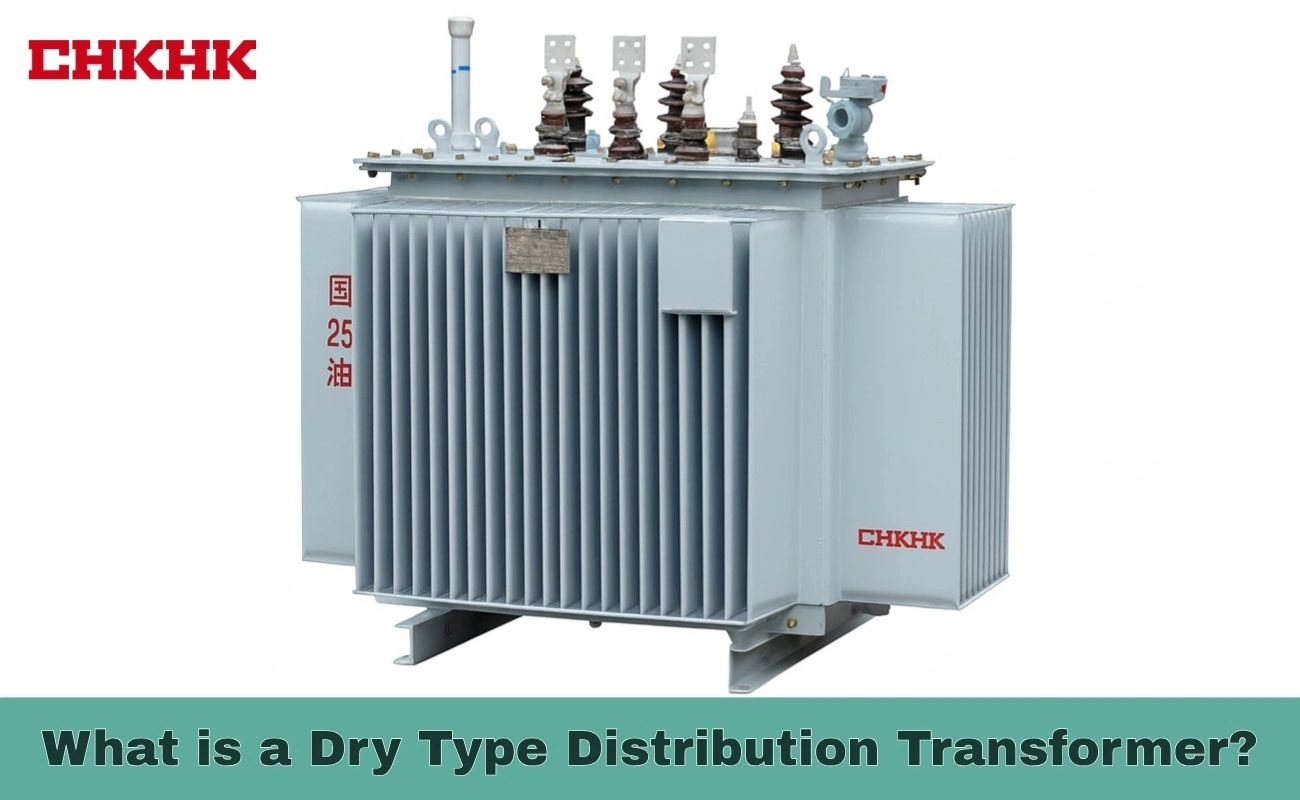
Find our Products : Distribution Transformers
The Buchholz Relay What It Does to Protect
The Buchholz relay is a dedicated fault-detection device within the electronic component transformer protection scheme, It is mounted in the pipe between the main tank and the conservator and operates in two stages:
- Alarm stage: Slow gas accumulation from minor internal faults – partial discharge, core overheating – collects in the relay housing and triggers a warning signal
- Trip stage: A sudden oil surge from a major fault – winding short circuit, core failure – actuates a float switch, tripping the transformer immediately offline
Per IEC 60281, Buchholz relays are mandatory on all oil-immersed transformers above 500 kVA fitted with conservator tanks.
How Bad Power Affects Transformer’s Components Life
Power quality disturbances simultaneously stress multiple components of distribution transformer assemblies, compounding degradation and cutting years from service life:
- Voltage harmonics: Increase eddy current losses in core and windings; raise operating temperature above rated class limits
- Voltage surges/transients: Stress bushing and winding insulation; repeated events cause cumulative breakdown
- Sustained overvoltage: Drives core into saturation; increases magnetizing current and core losses
- Load imbalance: Generates neutral current causing additional heating in windings and tank
- Frequent switching: Accelerates tap changer contact wear and mechanical fatigue
Research published in Energies (MDPI) confirms that harmonic distortion above 5% THD reduces distribution transformer service life by up to 30% compared to clean power conditions.
Why Chkhele’s Distribution Transformer’s Is the Most Prefered
Chkhele distribution transformers are built around precision-engineered components of distribution transformer assemblies – high-grade silicon steel cores, precision-wound copper windings with full insulation coordination, and factory-tested protection systems including Buchholz relays and winding temperature monitors as standard.
From standard ONAN-cooled units to custom configurations with ONAF cooling and on-load tap changers, Chkhele covers every distribution requirement with documented IEC compliance and full factory acceptance testing before dispatch, Contact the Chkhele technical team to specify the right unit for your network voltage, load profile, and installation environment.
FAQs
How does a distribution transformer work in simple terms?
It uses electromagnetic induction between two windings on a shared iron core to step voltage up or down, delivering power from the supply network to end users safely.
What is the purpose of the conservator tank?
The conservator tank accommodates oil volume changes as temperature varies, maintaining steady pressure and preventing external moisture from contaminating the insulating oil.
What is the function of a tap changer in a transformer?
A tap changer adjusts the active number of winding turns to regulate output voltage, compensating for supply fluctuations and load variations across the distribution network.
