

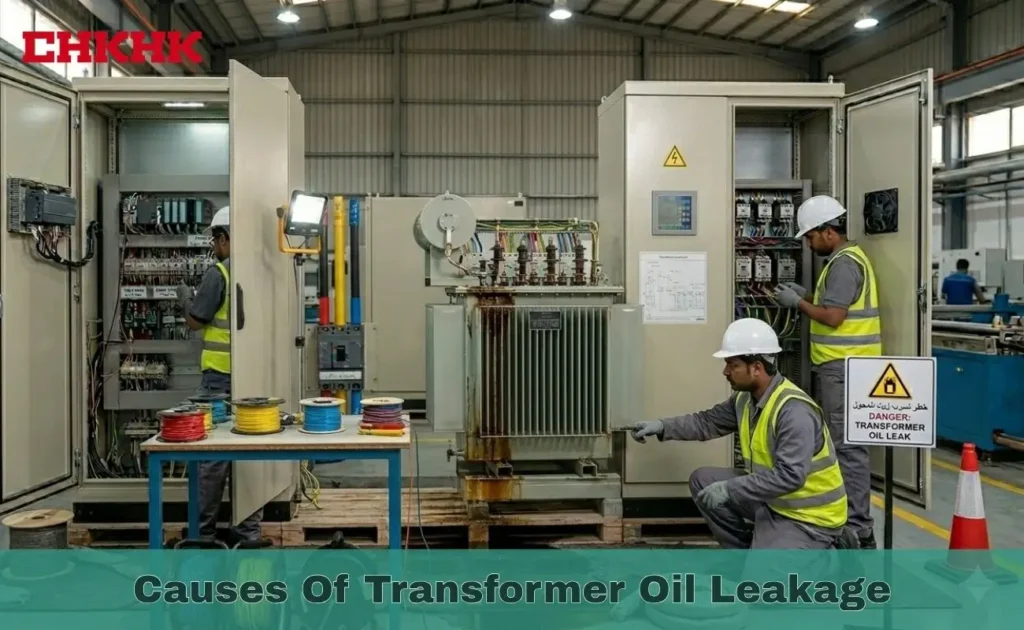
The causes of transformer oil leakage range from manufacturing defects and aging seals to thermal stress and environmental damage, According to industry surveys, oil leaks account for 15–25% of all transformer maintenance incidents – and unaddressed leaks can reduce transformer service life by 30–50% through moisture ingress and insulation degradation, Every leak point – whether a bushing gasket, weld seam, or radiator joint – represents a direct threat to insulation integrity, cooling performance, and operational continuity, Understanding the root causes of oil leakage in transformer systems is the first step toward preventing failures before they escalate into costly emergency shutdowns.
What is transformer oil ?
Understanding the causes of transformer oil leakage requires knowing what transformer oil does. Per , transformer oil is a mineral-based dielectric fluid that performs three critical functions:
- Electrical insulation: Provides dielectric strength ≥30 kV between windings and the tank – far exceeding the insulating capability of air
- Heat transfer: Removes heat from windings through convection to external radiators, keeping the transformer within safe operating temperatures
- Arc suppression: Quenches internal arcs and prevents corona discharge inside the tank
When transformer oil leakage occurs, all three functions are compromised simultaneously – making leak prevention and early detection critical for transformer reliability.
Read More : Components of Power Distribution System | 2026 Guide
Importance of Oil in distribution transformers
Distribution transformers are the final step-down point before electricity reaches consumers, The oil inside these units is not just a coolant – it is the primary insulation medium between HV and LV windings, Any reduction in oil level due to causes of oil leakage in transformer creates a direct risk of insulation failure, arc discharge, and transformer failure.
Consequences of oil loss
When oil level drops below safe thresholds, the following failure sequence can occur:
- Reduced dielectric strength – partial discharge begins between windings
- Winding hotspot temperature rises as cooling capacity decreases
- Insulation paper degrades irreversibly – accelerating aging by 2× for every 10°C above rated temperature
- Arc flash or catastrophic transformer failure – requiring complete replacement
causes of transformer oil leakage
The causes of transformer oil leakage fall into four main categories – each requiring a different detection and repair approach:
1. Gasket and seal failure
The most common of all causes of oil leakage in transformer assemblies, Rubber gaskets harden, crack, or lose elasticity over time due to thermal cycling and prolonged oil exposure, Uneven bolt torquing during installation also creates gaps that allow oil seepage under pressure variation.
2. Weld defects and tank corrosion
Manufacturing defects – including sand holes, pores, and incomplete welds – may be concealed by flux and paint at the factory but become exposed after years of thermal cycling and electromagnetic vibration, Mild steel tanks corrode in moist, coastal, or chemically aggressive environments, progressively weakening the tank wall.
3. Transformer oil leakage from bushing
Bushing-related leaks are a high-risk failure mode, Transformer oil leakage from bushing points occurs when bushing gaskets degrade, mounting flanges corrode, or the bushing body develops micro-cracks from electrical stress, mechanical vibration, or thermal shock, Bushing leaks are particularly dangerous because they expose energized conductors to moisture ingress.
4. Radiator and valve leaks
Radiator tubes are welded steel assemblies subject to pressure and thermal fatigue, Over time, fin-to-header joints, butterfly valve flanges, and drain valve seats develop leaks – especially following overload events or physical impact during transport and installation.
Read More : Top Power Distribution Transformer Manufacturers | Chkhele
Most Common Leakage Locations
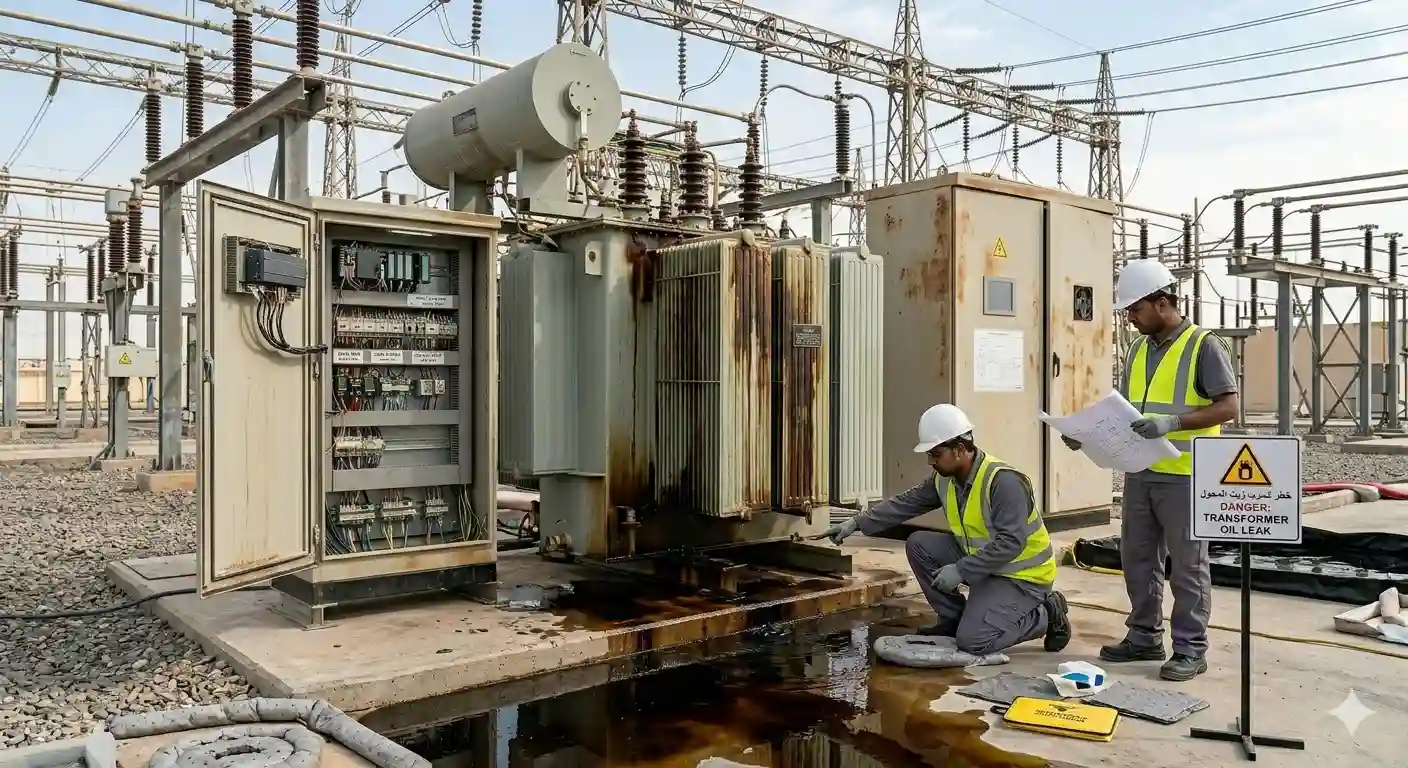
Identifying the causes of transformer oil leakage requires a systematic inspection of the most vulnerable points, The primary leakage locations in order of frequency are:
| Location | Common Cause | Risk Level |
| Gaskets and flanges | Aging, uneven bolt torque, thermal cycling | High – most frequent |
| Bushings | Gasket degradation, micro-cracks, corrosion | Critical – moisture ingress risk |
| Weld seams and tank | Manufacturing defects, vibration, corrosion | High – difficult to repair on-site |
| Radiator connections | Thermal fatigue, physical impact, corrosion | Medium |
| Drain and sample valves | Seal aging, improper operation, corrosion | Medium |
Advanced Diagnostic Methods for Detecting Transformer Oil Leakage
Early detection of the causes of transformer oil leakage prevents minor seepage from escalating into catastrophic failure, The primary diagnostic methods are:
- Visual inspection: Check for oil stains, discoloration, and corrosion around flanges, bushings, weld seams, and the base – performed weekly or after abnormal load events
- Oil level monitoring (MOG): The Magnetic Oil Gauge provides direct indication of oil volume – any unexplained drop requires immediate investigation
- Infrared thermography: Detects hotspots caused by reduced oil cooling – particularly effective for identifying incipient winding overheating before insulation failure
- Dissolved gas analysis (DGA): Per IEEE C57.104, DGA identifies gases dissolved in oil that indicate specific fault types – including thermal degradation, partial discharge, and arcing
- Pressure testing: Nitrogen pressure test (2 lbs) applied after seal repairs to confirm leak-free integrity before re-energization
Read More : Components Of Substation and Their Functions
Technical Procedures for Sealing and Repairing Transformer Leaks
The correct transformer oil leakage solution depends on the location, severity, and the specific causes of transformer oil leakage identified during inspection:
- Gasket replacement: De-energize and drain oil to safe level; remove bolted components; replace gasket with oil-resistant rubber; re-torque bolts in cross-pattern to even compression
- Weld seam repair: Apply titanium steel compound for immediate sealing; reinforce after curing with water-oil compatible repair agent; factory return required for severe weld failures
- Bushing repair: Replace bushing gaskets and re-seat mounting flanges; perform dielectric test after repair to verify insulation integrity
- On-site sealing compounds: Specialized sealants can stop minor active leaks without de-energizing – for use only by qualified personnel with full safety protocols in place
For active major leaks, the first priority is de-energization and oil containment per EPA SPCC regulations (US) – which require containment systems sized for the full oil volume plus 10% freeboard.
Advantages of Chkhele’s transformers
Chkhele designs every transformer to minimize the causes of transformer oil leakage from the outset – combining precision manufacturing with field-proven sealing systems.
Every Chkhele transformer addresses the primary transformer oil leakage risks through:
- High-performance gasket systems: Oil-resistant EPDM gaskets with precision-machined flange surfaces – eliminating the uneven sealing surfaces that cause most gasket failures
- Full weld inspection: 100% weld inspection and pressure testing before dispatch – ensuring zero manufacturing-origin leaks reach the field
- Bushing quality control: Every bushing assembly tested to IEC 60137 before installation – eliminating transformer oil leakage from bushing as a post-installation failure risk
- Corrosion-resistant construction: Hot-dip galvanized tank hardware and epoxy-primer coating for coastal and industrial environments
- Comprehensive service support: Chkhele provides transformer oil leakage solution documentation and technical support for every unit – including maintenance schedules, seal replacement guidance, and DGA interpretation
FAQs
What kind of oil is inside of a transformer?
Most transformers use mineral-based dielectric oil – a refined petroleum product with high dielectric strength (≥30 kV) and excellent thermal conductivity for cooling and electrical insulation per IEEE C57.106.
When is a transformer leak considered unrepairable?
A leak is typically unrepairable on-site when it involves structural weld failure, severe tank corrosion, or cracked bushing bodies – these require factory return or complete transformer replacement.
What are the environmental risks of a transformer oil leak?
Transformer oil is a regulated substance – spills contaminate soil and water, trigger EPA SPCC reporting requirements, and may constitute hazardous waste if PCB content exceeds 5 ppm, Containment bunds are required by law for units above 1,320 gallons capacity.
