

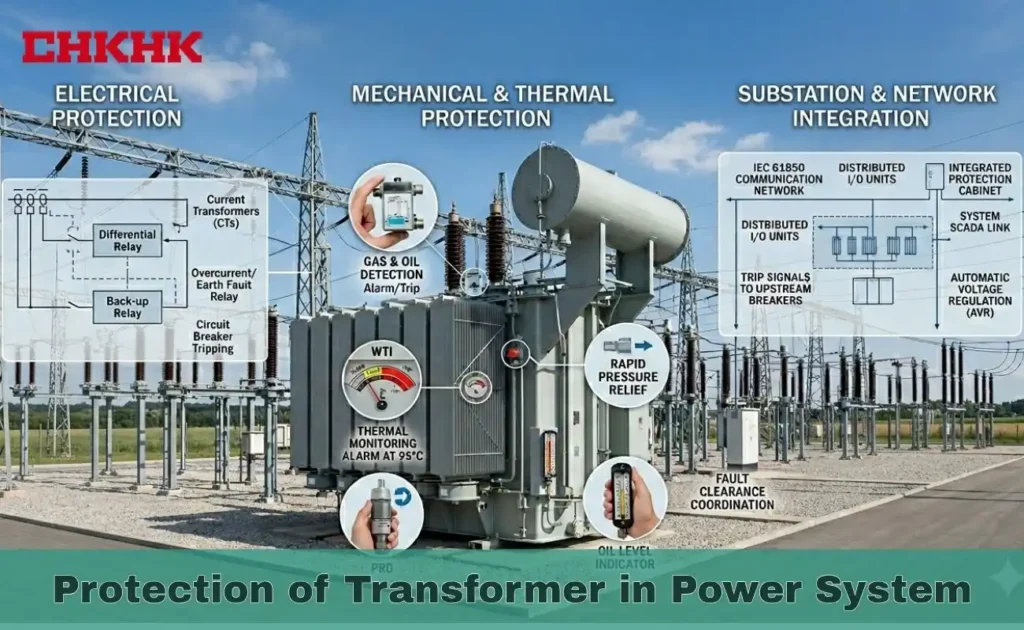
Protection of transformer in power system is vital for ensuring functionality and preventing costly system failures. Transformers are key components of a power system and are subject to electrical faults, thermal failures, and other external phenomena. Short circuit and lightning faults are some of the external phenomena to which transformers are exposed. Due to these reasons, transformer protection devices are used to achieve overcurrent protection, differential protection for transformer, and thermal protection are some of the protection schemes that have been employed to protect transformers. These systems identify any potentially hazardous conditions and remove the transformer from the system to avoid extensive damage.
What is protection of transformer in power system?
In the power system domain, protecting a transformer means using many devices and approaches to identify faults or unusual conditions. Then, isolate the transformer to prevent damage. This process protects against various issues, including short circuits, loads, overheating, and failures within the transformer’s internal windings.
This protection is not just for transformer, it also provides more safety and reliability for more electrical components such as switchgears, and allows for the steady operation of the power supply across the network.
Read More : Prevent Faults with Oil Type Transformer Protection Systems
Why Is Transformer Protection Important?
Protecting transformers is key to ensuring safe operation, avoiding harm from equipment damage, and keeping power systems running efficiently.
- Avoids harm to equipment: Isolates faults within seconds to guard transformer windings and insulation.
- Safeguards system stability: Prevents cascading failures throughout the power network.
- Diminishes downtime: Detects and resolves faults to shorten system interruptions.
- Improves safety: Protects people and nearby equipment from electrical risks.
Protection of transformer in power system Methods
Transformer protection methods detect system faults, avert transformer damage, and aid in maintaining secure and reliable operation of the power system.
- Differential protection: Monitors input and output current to spot possible internal faults.
- Overcurrent protection: Safeguard against overload as well as faults from the current flowing through the external system.
- Buchholz relay: Detects internal faults of an oil filled transformer, using the movement of gas and oil.
- Thermal protection: Protects the transformer from an excessive temperature that could damage the system.
- Earthing transformer protection : Detects and isolates the faulted power system by tracking down ground fault currents.
The most common faults transformers face
Transformers may face many dangers if the fault is not detected and acted upon in a timely manner.
- Winding fault – A short-circuit fault or a fault in the insulation that occurs in the transformer’s windings.
- Overloading – Excessive loading of the transformer can cause overheating and a decrease in the life of the transformer.
- Insulation breakdown – With aging and moisture present, the insulation will have a lower dielectric strength.
- Core faults – Core overheating, loss of lamination, and other core issues.
- Oil leakage (oil-filled) – causes the transformer to lose its cooling and cause internal insulation faults.
- External faults – lightning, surges, or faults in the systems that are connected to the transformer.
Read More : What is a Dry Type Distribution Transformer?
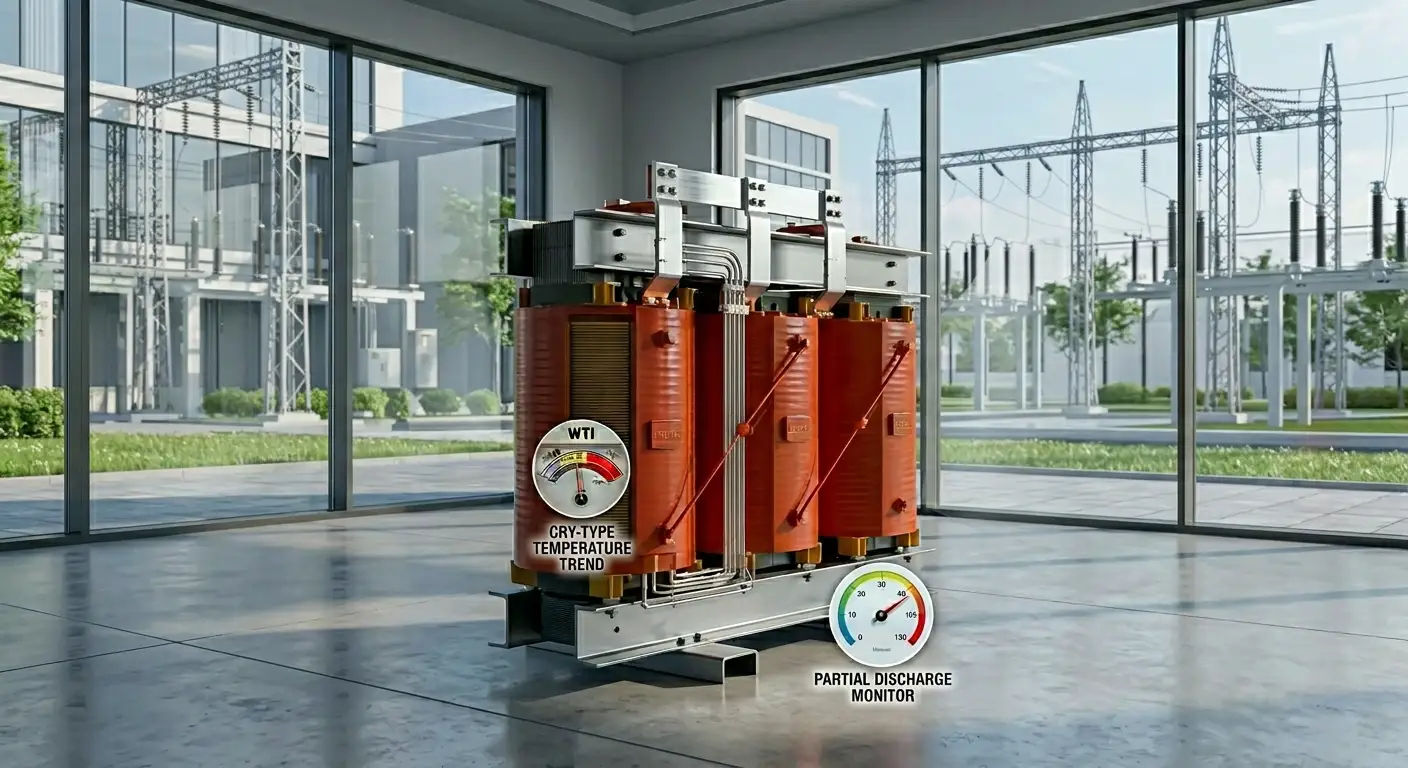
Transformer protection devices
Faults that occur in any part of the power system will cause severe damage unless there is protection of transformer in power system transformers are achieved with smart transformer protection devices to detect the fault as quickly as possible and to carry out safe and reliable isolation of that fault.
- Differential relay: one of the protection devices that detects an internal error by analyzing the input current in combination with the output current.
- Overcurrent relay: Offers electrical protection of transformer for problems due to overloads and external faults occurring in the transformer.
- Buchholz relay: protection devices used to detect internal faults in an oil transformer due to a gas bubble.
- Thermal relay: A protection device that detects temperature in order to avoid the transformer overheating and subsequently damaging the insulation.
- Surge arrester: Protects against sudden alterations in voltage that occur as a result of lightning or switching.
Read More : Causes of Transformer Oil Leakage: A Technical Guide to Prevention
Role of Buchholz relays in detecting internal faults
While talking about protection of transformer in power system, buchholz relays are important for the detection of internal faults as well as the protection of the insulated transformer.
- Gas formation detection: Detects the formation of gas that results from insulation failure or faults.
- Oil movement detection: Detects the rapid movement of oil that occurs as a result of major internal faults.
- Fault indication: Provides the indication of minor faults prior to their major development.
- Circuit breakers: Triggers circuit breakers to operate during transformer faults.
Thermal monitoring solutions for preventing transformer winding insulation failure
Thermal monitoring of transformer windings insulation failures safeguard system operations against overheating.
- Temperature sensors (RTDs/PTCs): Provide real-time temperature assessments of the windings and oil.
- Fiber optic sensors: Measure the temperature of hotspots in transformer windings.
- Thermal relays: Provide alarms and trips when temperature exceeds the safe threshold.
- Online monitoring: Automatically regulates the system as required based on the temperature.
- Control of the cooling system: Continuously monitors the system and detects and alerts abnormal conditions.
- Data logging: Provides assessments and analytical data to predict the aging of insulation and the timing of maintenance.
Why choosing Chkhele’s transformers is your best decision
When it comes to modern power system applications, worldwide transformers provide reliability, efficiency, and engineering ingenuity, making them the transformers of choice.
- Quality Through Manufacturing – A result of high-quality materials assured to last throughout their life span.
- International Compliance – assured compliance to IEC and globally accepted safety and performance standards.
- Wide Range of Products – Providing Oil-Filled and Dry Type Transformers.
- Modern Technologies – A modern design, and efficient cooling system.
- Customized – A solution offered for your specific projects.
- Full Spectrum Testing – Airming of reliability through performance to various operational conditions.
- Outstanding Technical Support – An engineering support and service is offered.
FAQs
Why do we actually need transformer protection?
Protection of transformer in power system is essential for the early detection of faults to avoid damage to the equipment. Transformer protection devices also keep the system stable and avoid damage to individuals. These devices disconnect the faulty conditions easily and quickly to keep the downtime low, and the supply of electricity to the system high.
How does differential protection catch internal errors?
In a differential protection system, comparing the transformers’ incoming and outgoing current helps to find the internal imbalance. If there is imbalance, the protection device disconnects the transformer to avoid internal damage.
Where do fuses and breakers fit into the protection plan?
The protections provided by the circuit breakers and the fuses help to provide the primary and backup protection. These protections help to disconnect the faulted section of the system in a timely fashion, to take the transformers and the system devices from the fault.
How is smart tech changing transformer monitoring?
The faults in the transformers can be predicted using the smart technology which includes the sensors, remote diagnostics, and the data analytics technology. Smart technology also helps in the reduction of the unplanned maintenance of the transformers. The downtime of the transformers is minimized thereby improving reliability and performance.
