
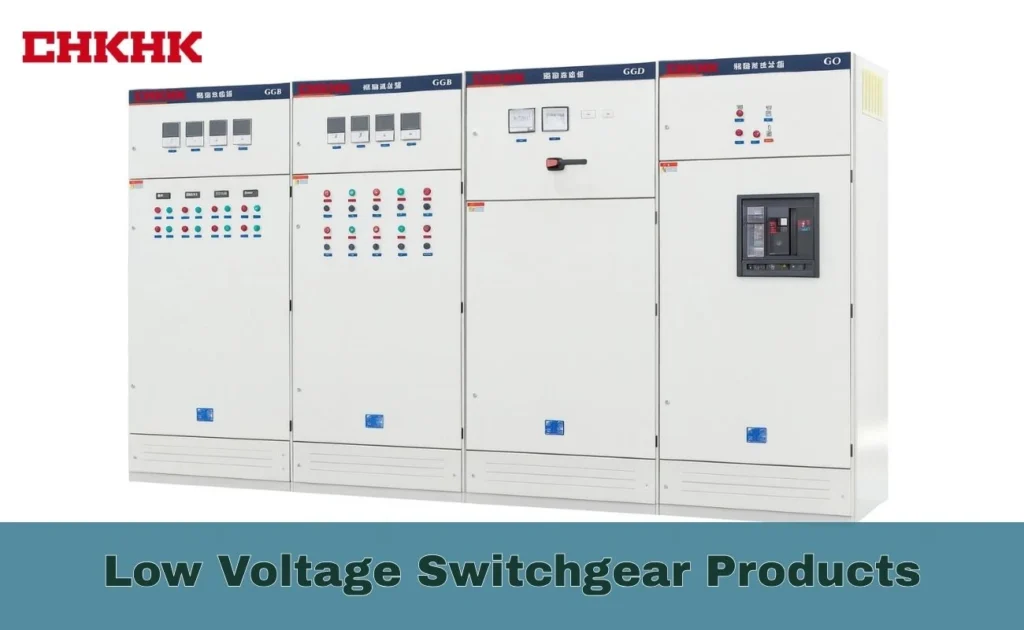
Low voltage switchgear products are vital elements for controlling, protecting, and distributing electrical power for systems of up to 1 kV. This range includes circuit breakers, distribution boards, motor control centers, and protection devices. They help systems remain operational and fault-free, enabling reliability.
What is low voltage switchgear ?
Low voltage switchgear is an electrical system that provides control, protection, and power distribution for circuits that work at voltage levels of 1 kV or less. Its functional units include circuit breakers, switches, fuses, and protection relays that control the flow of electrical energy to keep the system safe and operational. They also provide the detection of system faults, such as overloads and short circuits, and provide the capability to isolate and clear the affected areas quickly.
Low voltage switchgear is used in homes, offices, and industrial applications. Providing fault detection and safe isolation enhances the operational safety, and an effective power distribution system ensures safe energy use. Additionally, new features in these systems allow digital control and monitoring, which greatly increases the effectiveness and control.
Read More : Metal-Clad Switchgear vs Metal-Enclosed
Core Components of low voltage switchgear products
The low voltage switchgear products contain main integral parts to guarantee safety and higher level of control and protection
- Many types of circuit breakers offer protection from overload and short circuit by interrupting the flow of current.
- Disconnect switches make it possible to safely isolate the equipment for maintenance and during a fault.
- Fuses offer simplified over current protection by disrupting a circuit that exceeds the limit.
- Busbars help in distribution of electrical power within the switchgear systems.
- Protection relays: identify possible faults and enact the required protection.
- Meters and Indicators provide insight on the operational behavior on the system.
Read More : difference between primary and secondary transformer’s Winding
How to choose the best low voltage switchgear products’ Manufacturer
Safety, performance, and reliability in the long run give a more complex picture as different parts of an electrical distribution system give different answers to the questions and choosing the right low voltage switchgear manufactures is more complex.
- Compliance with standards: Nominated manufacturers of IEC3 61439, UL and all other global recognized standards provide safety and performance.
- Ability to manufacture: Quality is produced with the aid of the developing engineered skilled and usable production abilities and researched and developed to an advanced level that is all.
- Quality, Control and Testing: A sure and confirm to the three of the following as opposed to numerous to ensure the reliability and use of the practice as opposed to the theoretical.
- Range of the products: A variety of the panels applications differing from MCC, PCC, and the distributing panels solves the problems of manufacturers to choose.
- Ability to customize: Is flexibility to the three projects specific to the voltage, the load, and the environment.
- Support after the sales: The long-term operation of the system is more important than reliability of the technical assistance, spare parts, and maintenance support.
- Matching the technical parameters: Confirm that there is a mismatch system compatibility.
Read More : Low voltage switchgear manufacturers
Integrating Smart Technology in low voltage switchgear products
The application of advanced technology on low voltage switchgear products is an important step to provide real-time monitoring, automation, and smart protective functions to modern electrical distribution systems.
- Real-time monitoring provides tractable and continuous flow of data and information on voltage, current, temperature, and other systems.
- Smart protection relays enable quick and timely fault detection and better coordination of protection devices.
- Predictive maintenance provides information on anticipated equipment failure and offers solutions to down time.
- Communication integration offers connections to SCADA and other energy management systems.
- Data analytics improves performance and enhances decision making.
Read More : Choosing the Best Combiner Box Manufacturers for PV Systems
Arc Flash Mitigation Technologies in Modern LV Switchgear
While talking about innovations in LV switchgear, we must mention dealing methods with arc flashes to boost safety and reduce risks for people and equipment.
- Arc detection systems: Use optics and current measurement systems to detect arc-related faults and make arc-fault-related trip activations.
- Circuit breakers with fast response to interrupt fault current and reduce dangers of arc and damage.
- Arc resistant enclosures: Contain and redirect arc energy to avoid contact with personnel.
- Interlocking with zone selective with protective devices, it enables faster and selective fault removal.
Preventive Maintenance Procedures for Low Voltage Power Products
There are many procedures to make regular inspection and maintenance.
- Visual inspection to check signs of wear, signs of corrosion, connections, and overheating of components.
- Checking connections to ensure all screws and bolts holding the terminals and busbars are tight.
- Electrical testing and insulation resistance and continuity testing.
- Thermal testing to find components that are suddenly hot or showing abnormal hot spots.
- Making functional testing to make sure that protection devices and circuit breakers are working well.
Common causes of failure in low voltage switchgear products
When low voltage switchgear understanding, explaining key causes of breakdowns increases reliability, safety, and long-term performance of electrical systems.
- Overloading: Components are damaged due to heat from excessive current.
- Poor maintenance: A lack of servicing and inspections leads to gradual deterioration of the device.
- Loose connections: Creates arcing, heat buildup, and failure.
- Insulation breakdown: The aging and contamination of insulation leads to a loss of dielectric strength.
- Environmental factors: performance is affected by dust, moisture, and corrosion.
- Faulty components: Protective systems are compromised by bad breakers or relays.
Why is Chkhele the best switchgear manufacturer ?
Chkhele earns its position as top switchgear manufacturer from strong engineering skill, high quality production, and being modular and reliable for power solution delivery worldwide.
- The ability to stay within global and non-national boundaries on regulations: This means that the product is marked to be within IEC, and all other rules that govern the safety and quality.
- Technical means of creation: The ability to make a product advanced is determined by the ability to produce at a level where quality is ensured and production is at high levels and precision is the goal.
- Range of product: This means that low, medium, and high switchgears of all varieties and purposes are manufactured.
- Testing: Routinely, The object being tested is the performance of the product and to be sure the product is reliable and safe.
- The ability to customize: This means that there is a possibility of creating a solution that is tailor built for the situation and the environment of the project.
- Knowledge is a power when it comes to creating: The ability to design comes from powerful and experienced people.
- The ability to create a product is the primary goal, Still systems need to be supported and this becomes a goal in its own right.
FAQs
What does IEC 61439 mean for low voltage switchgear quality?
IEC 61439 specifies requirements for the design, testing and performance of low voltage switchgear assemblies on an international scale. Standardizing testing and performance requirements ensures the assemblies’ safety, reliability, effective management of temperature rise, short circuit strength, and real life operational performance.
Why is the form of internal separation important in LV panels?
It is important to enhance safety by isolating functional units, reducing fault propagation, improving maintenance access, and operational continuity of the electrical systems.
