
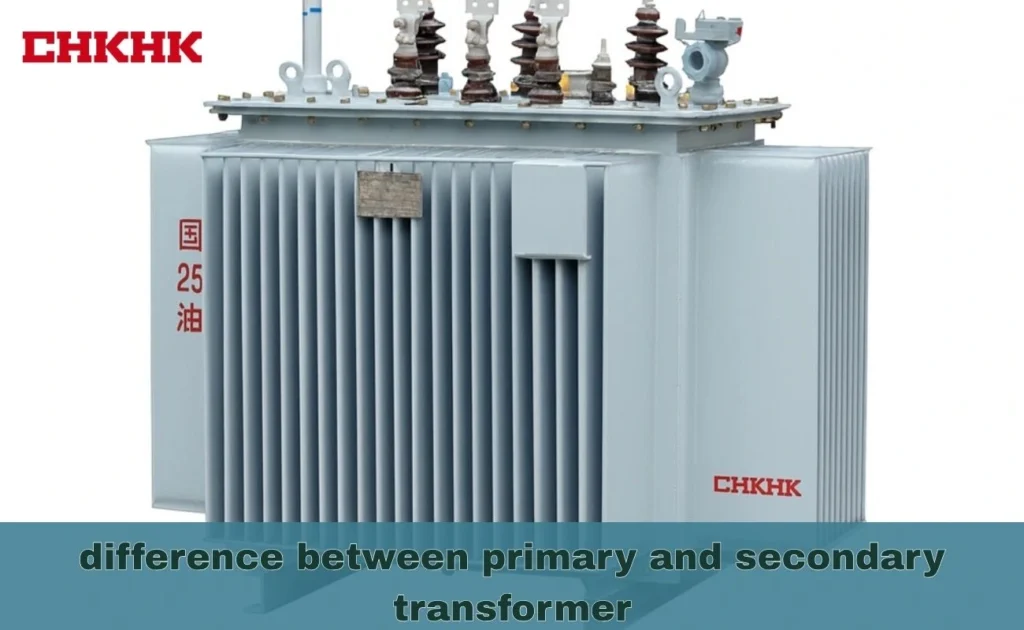
Understanding the difference between primary and secondary transformer windings is essential for every electrical engineer and technician, Each winding performs a distinct role in energy transfer and voltage transformation , knowing this difference helps you select the right transformer and ensure optimal efficiency for any electrical application.
Key Functions of the Primary Winding in Transformers
The primary winding is the electrical entry point of a transformer , it receives alternating current (AC) from the power source and converts it into a varying magnetic field through the iron core, directed toward the secondary winding.
Key functions of the primary winding include:
- Receiving AC voltage from the utility grid or connected power source.
- Generating a varying magnetic field that travels through the iron core to the secondary winding.
- Setting the transformation ratio based on its number of turns relative to the secondary.
- Providing electrical isolation between the input and output sides.
Read More : Low voltage switchgear manufacturers
Key Functions of the secondary Winding in Transformers ?
The secondary winding is the output side of the transformer , it receives the varying magnetic field and converts it into electrical voltage suited for the connected load, based on Faraday’s law of electromagnetic induction.
Key functions of the secondary winding include:
- Inducing electrical voltage from the magnetic field generated by the primary winding.
- Supplying the electrical load, whether household appliances or industrial equipment.
- Determining the output voltage level based on its turns ratio with the primary.
- Carrying higher current in step-down transformer applications.
Read More : Choosing the Best Combiner Box Manufacturers for PV Systems
difference between primary and secondary transformer
The core difference between the primary and secondary transformer windings spans function, voltage level, number of turns, and wire thickness, According to ScienceDirect, modern transformers achieve efficiency levels between 97% and 99.5%.
The following table summarizes the key comparison points:
| Feature | Primary Winding | Secondary Winding |
| Function | Energy input & magnetic field generation | Energy output & load supply |
| Voltage Level | Higher (typically) | Lower in step-down transformers |
| Number of Turns | More turns in step-down | Fewer turns in step-down |
| Wire Thickness | Thinner wire (lower current) | Thicker wire (higher current) |
| Grid Connection | Connected to the power grid | Connected to the load or device |
Voltage Transformation Ratios and Turns Count Relationships
The transformation ratio is defined by the mathematical relationship between the number of turns in each winding, The U.S. DOE 2016 standard mandates an efficiency range of 97.89% to 99.28% for three-phase distribution transformer systems.
Transformer types based on turns ratio are as follows:
- Step-Down Transformer Primary turns > Secondary turns → Voltage decreases.
- Step-Up Transformer Secondary turns > Primary turns → Voltage increases.
- Isolation Transformer Equal turns on both sides → Voltage remains unchanged.
Core Formula:
V1V2=N1N2\frac{V_1}{V_2} = \frac{N_1}{N_2}V2V1=N2N1
Where:
- V = Voltage
- N = Number of turns in the winding
Reference: IEEE C57.12 Transformer Standards
Operational Characteristics of Secondary Winding in Load Delivery ?
When a load is connected to the secondary winding, the transformer’s operational profile shifts significantly, According to the International Energy Agency (IEA), transformer losses represent 30–40% of total power system losses globally.
The most notable operational characteristics include:
- Voltage regulation Secondary voltage fluctuates with load changes; the smaller this fluctuation, the more efficient the transformer.
- Mutual inductance A continuous magnetic energy exchange occurs between both windings through the iron core.
- Exciting current With no load connected, the primary draws 2–5% of full-load current to energize the iron core, per IEEE C57.12.
- Transmission losses The World Bank reports average global electricity losses of 5–8% annually , significantly reduced by high-efficiency transformers.
Features of Chkhele’s transformer
Chkhele transformers are built to the highest international standards, in a global market valued at USD 21.9 billion in 2024 (GMInsights), with steadily rising demand for high-efficiency primary and secondary transformer solutions.
Key features of Chkhele transformers include:
- Precise transformation ratio,Tightly controlled turns ratios ensuring stable output voltage.
- Superior electrical isolation Strong insulation between primary and secondary windings to protect connected equipment.
- EcoDesign Tier 2 compliance Reduces annual energy losses by 20–25 MWh, saving $15,000–$25,000 per year per the European Commission EcoDesign Directive.
- Versatile applications Suitable for industrial, commercial, and residential use.
- International standard compliance Meets IEC 60076 and IEEE C57.12 specifications.
Common Mistakes in Primary and Secondary Transformer Installation
Common installation mistakes cause direct operational losses , the World Bank reports that average global electricity transmission losses range between 5–8% annually, a portion of which stems from installation errors.
Key mistakes to avoid:
- Reversing winding connections Connecting the load to the primary winding instead of the secondary damages the transformer and creates serious electrical hazards.
- Neglecting voltage regulation Failing to measure secondary voltage fluctuation under load causes instability that damages connected equipment.
- Exceeding load capacity Operating the transformer beyond its rated capacity raises temperature and significantly shortens its service life.
- Poor ground insulation Improper earthing exposes both equipment and personnel to serious electrical safety risks.
- Skipping periodic inspection Neglecting maintenance of both primary and secondary windings leads to gradual insulation degradation and efficiency loss.
FAQ
Can the secondary winding be used as a primary input in a transformer
Transformers are inherently non-directional devices, so reversing the windings’ roles in a primary secondary transformer is theoretically possible, However, this requires verifying that the electrical insulation and wire ratings can handle the new input voltage , otherwise the transformer may sustain damage or fail to perform correctly.
Why is the secondary wire often thicker in step down transformers
In step-down transformers, output voltage decreases while current increases proportionally to preserve power balance (P = V × I), Thicker wire is essential to safely carry this higher current without excessive heat buildup , which explains the clear wire thickness difference between the two windings.
How to Select the Right Transformer for Industrial Applications
Selecting the right transformer for industrial applications depends on multiple technical and financial factors, in a market valued at USD 21.9 billion in 2024 (GMInsights) with continuously growing industrial demand.
Key selection criteria include:
- Required voltage level Define the transformation ratio between the primary and secondary winding based on your facility’s operational needs.
- Load capacity (KVA) Calculate total expected load with a safety margin of at least 20–25%.
- Operating environment Choose between dry-type or oil-immersed transformers based on temperature and humidity conditions.
- Efficiency standards Ensure the transformer complies with IEC 60076 or DOE 2016 to guarantee minimum energy losses.
- Ease of maintenance Prefer transformers with smart monitoring systems to minimize operational downtime.
References:
