
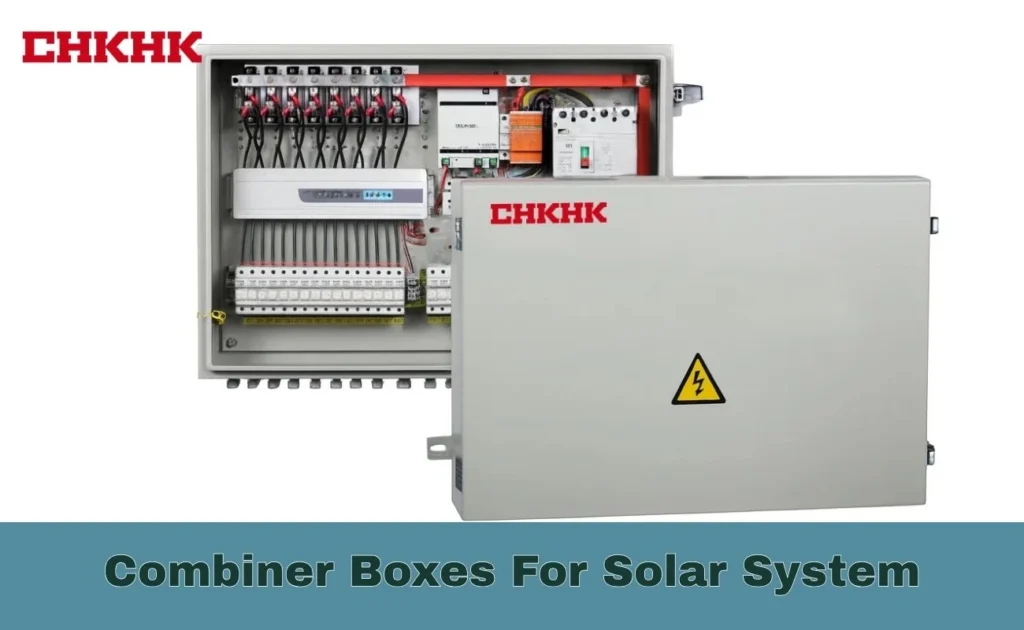
Combiner boxes for solar system installations are the unsung heroes of any photovoltaic setup, quietly managing power flow, protecting your investment, and keeping your entire array running at peak efficiency, Whether you’re planning a rooftop residential system or a large-scale commercial array, understanding how combiner boxes work is the first step toward a safer, more efficient solar installation, This guide walks you through everything: types, components, applications, safety standards, and how to choose the right one.
What is Combiner Boxes for Solar System?
A combiner box for solar system is an electrical enclosure installed between your solar panel array and the inverter, Its core job is straightforward: it collects the DC output from multiple solar panel strings and merges them into a single, unified output before sending power to the inverter.
Think of it as the central hub of your solar installation, where multiple power streams meet, get protected, and move forward as one.
How Does It Work Inside?
Each solar string feeds its positive and negative DC cables into dedicated input terminals inside the box, Those terminals connect through busbars, conductive metal strips, to a single positive and negative output, That combined output then runs to your inverter, Every input string has its own fuse or circuit breaker, so if one string develops a fault, only that string gets isolated, the rest of the system keeps producing power without interruption.
Read More : Low Voltage Switchgear Products
DC vs. AC Combiner Box
Not all combiner boxes handle the same type of current, DC combiner boxes are installed before the inverter, combining raw solar output from panel strings, AC combiner boxes, on the other hand, are used in microinverter systems, where each panel already has its own inverter and the box combines AC outputs instead, Knowing which type your system needs is fundamental before making any purchasing decision.
Where to Use Combiner Boxes in Solar Systems?
Combiner boxes are not a one-size-fits-all component, their value scales directly with system size and complexity. Here’s a breakdown of where they belong:
Residential Solar Systems
In home installations with more than three panel strings, a combiner box becomes highly beneficial, It reduces the number of cables running to the inverter, keeps wiring organized, and adds a layer of overcurrent protection that protects your inverter from damage caused by a single faulty string, Systems with fewer than three strings can connect directly to the inverter without one, but as your array grows, so does the need.
Commercial & Industrial Installations
Large commercial rooftops and industrial facilities often run dozens of panel strings simultaneously, In these environments, combiner boxes are not optional, they are essential, They streamline wiring complexity, cut material and labor costs significantly, and make maintenance far more manageable by centralizing all protection devices in one accessible location.
Utility-Scale Solar Farms
At utility scale, combiner boxes are distributed strategically across massive arrays, each one managing a cluster of strings before feeding power into central inverters, Without them, the wiring logistics of a megawatt-scale plant would be unmanageable.
EV Charging Stations with Solar Integration
A growing application for combiner boxes for solar system setups is in solar-powered EV charging stations, Here, the box manages multiple solar string inputs and directs clean, combined DC power toward the charging infrastructure efficiently and safely.
Read More : Metal-Clad Switchgear vs Metal-Enclosed
How to Choose Combiner Boxes for Solar System?
Choosing the right combiner box requires matching the box’s specifications to your system’s exact requirements, Here are the key selection criteria every installer and system owner should evaluate:
System Voltage Rating
The combiner box must be rated for a voltage equal to or exceeding your system’s maximum open-circuit voltage (Voc), This value is calculated by multiplying the Voc of a single panel by the number of panels connected in series per string, Never select a box with a lower voltage rating than your system’s maximum.
Number of String Inputs
Count your panel strings and choose a box that accommodates them, with room to grow, Industry best practice recommends sizing your combiner box at least 25% larger than your current string count to allow for future system expansion without needing a full replacement.
Current Capacity & Fuse Sizing
Each string’s maximum current must be calculated and matched to the appropriate fuse rating, The standard rule, per NEC requirements, is to multiply the panel’s short-circuit current (Isc) by 1.25 to determine the minimum fuse rating, For a panel with a 10A Isc, the correct fuse size is 15A, never lower.
Ingress Protection (IP) Rating
For outdoor installations, which represent the vast majority of solar deployments, look for a minimum IP65 rating, This ensures complete protection against dust ingress and resistance to low-pressure water jets, Coastal or harsh industrial environments demand IP66 or even IP67 for superior protection against high-pressure water and corrosive salt air.
Certifications & Compliance
Only select combiner boxes that carry internationally recognized safety certifications, In North America, UL 1741 is mandatory, Globally, IEC 61439-2 governs the structural and electrical safety of the enclosure, while IEC 61643-31 specifically covers surge protection devices (SPDs) designed for photovoltaic applications.
Monitoring Capabilities
For commercial and utility-scale systems, smart combiner boxes with per-string current monitoring, real-time data logging, and remote communication via RS-485 or Ethernet are worth the investment, They allow early fault detection, reduce unnecessary site visits, and protect long-term energy yield.
Read More : Difference between primary and secondary transformer’s Winding
Types of Combiner Boxes for Solar System
Understanding the different types of combiner boxes for solar system configurations ensures you select the right solution for your specific installation, Each type is engineered for a distinct use case:
| Type | Description | Best For |
| Standard DC Combiner | Combines strings with basic overcurrent protection, no monitoring | Small to mid-size residential & commercial |
| Smart Combiner | Per-string current sensors, real-time data, remote communication | Commercial, industrial & utility-scale |
| Explosion-Proof Combiner | Flameproof, waterproof, corrosion-resistant enclosure | Hazardous & harsh industrial environments |
| AC Combiner | Combines AC outputs from microinverter systems | Residential microinverter setups |
| AFCI Combiner | Integrates arc-fault circuit interruption for fire safety | Rooftop residential & commercial buildings |
| Disconnect Combiner | Built-in rapid shutdown capability for emergency isolation | All grid-tied systems per NEC 690.12 |
Choosing Between Standard and Smart
For smaller systems where monitoring is handled at the inverter level, a standard combiner box is a cost-effective, reliable choice, For larger installations, particularly those spread across multiple roof sections or ground-mounted arrays, a smart combiner box pays for itself quickly by catching string-level faults before they become costly failures.
Read More : Low voltage switchgear manufacturers
Key Components of Combiner Boxes for Solar System
Every combiner box for solar system use is built around a set of core internal components, each playing a specific protective or functional role, Understanding these components helps you evaluate quality and ensure long-term reliability.
Busbars
Busbars are the conductive metal backbone of the combiner box, They receive the positive and negative leads from all incoming strings and consolidate them into a single output path, Quality busbars are sized for worst-case current and temperature scenarios, undersized busbars overheat, corrode, and fail prematurely.
DC String Fuses or Circuit Breakers
Each input string is protected by a dedicated DC-rated fuse or molded case circuit breaker (MCCB), These devices isolate individual string faults without interrupting the rest of the array, For high-power PV systems, MCCBs rated between 63A and 630A offer robust protection for circuits carrying significant current loads.
Surge Protection Device (SPD)
Lightning strikes and switching transients are among the leading causes of inverter and panel damage in solar systems, A properly installed DC SPD diverts these voltage surges safely to ground before they reach sensitive electronics, For most rooftop applications, a Type 2 DC SPD is sufficient, for high-lightning-risk zones or large metal rooftops, a Type 1+2 SPD is strongly recommended, per IEC 61643-31.
DC Isolator / Disconnect Switch
This switch allows maintenance personnel to fully disconnect the PV array from the rest of the system safely, without shutting down the entire installation, It is a mandatory safety component in most national electrical codes and a critical feature for any professional installation.
Enclosure & Cable Glands
The physical enclosure protects all internal components from environmental exposure, High-quality enclosures are manufactured from UV-resistant polycarbonate or powder-coated steel, with properly sealed cable glands at every wire entry point, An unsealed cable entry compromises the entire IP rating of the box, a common and costly installation mistake.
Communication Module (Smart Models)
In advanced combiner boxes, a built-in communication controller collects data from current sensors on each string and transmits it to an inverter or SCADA system, This enables real-time performance monitoring, automated fault alerts, and remote diagnostics, eliminating the need for manual string-level inspections.
Read More : Choosing the Best Combiner Box Manufacturers for PV Systems
Applications of Combiner Boxes and Where to Use?
The versatility of combiner boxes for solar system projects extends across nearly every segment of the solar industry, Here’s where they deliver the most value:
- Rooftop residential arrays with four or more panel strings, centralizes protection and simplifies wiring to the inverter
- Commercial flat-roof installations, manages large string counts efficiently while enabling per-string performance monitoring
- Ground-mounted utility arrays, distributed placement of combiner boxes across the field reduces long cable runs and improves fault isolation
- Agricultural solar (agrivoltaics), protects systems exposed to dust, humidity, and equipment vibration in farming environments
- Off-grid and hybrid systems, provides organized, protected DC input management for battery-based installations
- Solar-powered EV charging infrastructure, integrates multiple solar strings into a clean, stable DC feed for charging systems
Why Do You Need a Solar Combiner Box?
Without a combiner box, engineers must wire multiple strings directly to the inverter, a setup that quickly becomes disorganized, difficult to maintain, and potentially hazardous as system size grows, Here is why investing in a quality combiner box is one of the smartest decisions in any solar project:
Simplified Wiring Architecture
Instead of running individual string cables across long distances to the inverter, a combiner box consolidates everything locally, reducing cable runs and keeping the installation clean and serviceable for years to come.
Enhanced System Protection
Every string gets its own dedicated overcurrent protection device. If a single string develops a ground fault, short circuit, or abnormal current, its fuse or breaker trips, isolating the problem instantly without impacting the rest of the array, Combined with SPD protection against lightning and switching surges, the entire system becomes significantly more resilient.
Reduced Installation and Maintenance Costs
Fewer long cable runs mean lower material costs and faster installation, During maintenance, technicians can identify and isolate individual strings at a single accessible point rather than tracing cables across the entire roof or field, saving hours of diagnostic time per visit.
Emergency Shutdown Capability
A combiner box equipped with a DC disconnect or rapid shutdown function allows the entire PV array to be de-energized quickly in an emergency, a requirement under NEC 690.12 for all grid-tied systems installed on or within buildings.
Safety Considerations of Combiner Boxes
Safety is non-negotiable when working with DC solar systems, where voltages can exceed 1,000V and arc faults do not self-extinguish the way AC faults do. Here are the critical safety standards and practices every installer must follow:
Compliance with NEC Article 690
NEC 690 governs all PV system installations in the United States, covering conductor sizing, overcurrent protection placement, disconnect requirements, grounding, and rapid shutdown. Combiner boxes must comply with NEC 690.9 for overcurrent protection and NEC 690.12 for rapid shutdown in building-integrated systems.
Mandatory Grounding & Bonding
NEC Articles 250 and 690.43 require the use of an equipment grounding conductor (EGC) for all metal-framed PV systems. All metallic enclosure parts must be bonded together, and ground resistance must be verified to be below 25 ohms per NEC 250.53. Skipping proper grounding increases shock risk, compromises ground-fault detection, and can result in equipment damage.
Arc-Fault Protection (AFCI)
NEC 690.11 mandates listed DC arc-fault circuit interruption (AFCI) protection for PV systems installed on or within buildings, The protection device must detect arcing conditions, interrupt the fault, and provide notification, IEC 63027 establishes the international performance standard for Arc Fault Protection Equipment (AFPE) in PV DC circuits.
Personal Protective Equipment (PPE)
When working on or near energized combiner boxes, Category 2 PPE rated at a minimum of 8 cal/cm² is required, String voltages in a typical solar combiner box range from 300V to 600V DC, and on cold days, open-circuit voltages can spike significantly higher, DC arc flash does not self-extinguish like AC, making proper PPE non-negotiable.
Regular Inspection Schedule
Inspect your combiner box every six months, Check for moisture ingress, corrosion, loose terminals, and SPD status indicators, Replace any component showing discoloration, melted insulation, or red SPD warning indicators immediately.
Why Chkhele’s Combiner Boxes Are the Best to Use?
When it comes to protecting your solar investment, not all combiner boxes are built equal, and Chkhele has engineered its combiner boxes for solar system installations to outperform the competition at every level.
Built to the Highest International Standards
Every Chkhele combiner box is certified to UL 1741, IEC 61439-2, and IEC 61643-31, the gold standard certifications for PV combiner equipment, You get full compliance with NEC 690 requirements right out of the box, eliminating costly inspection failures and rework on your projects.
All-in-One Protection Architecture
Chkhele integrates DC string fuses, Type 2 SPD surge protection, a main DC isolator switch, and a sealed IP65+ enclosure into a single, ready-to-install unit, There’s no need to source and assemble individual protection components separately, everything you need to build a safe, code-compliant system arrives pre-integrated and tested.
Smart Monitoring That Saves You Money
Chkhele’s advanced combiner boxes feature per-string current monitoring with real-time data transmission via RS-485 or Ethernet, Faults, string mismatches, and blown fuses are detected automatically, long before they become expensive problems, For commercial and utility-scale operators, this means fewer site visits, faster diagnostics, and higher lifetime energy yield from every installation.
Engineered for Harsh Environments
From desert heat and sandstorms to coastal salt air and tropical humidity, Chkhele combiner boxes are built for the conditions where solar systems actually operate, With IP66-rated enclosures, UV-stabilized materials, and corrosion-resistant hardware, they deliver reliable performance over a 25-year system lifetime, in any climate.
Scalable Across Every Project Size
Whether you’re commissioning a 10kW residential rooftop or a 50MW utility plant, Chkhele offers combiner box configurations to match, from compact 4-string residential units to high-capacity 32-string commercial models, Every unit is designed with future expansion in mind, so your protection infrastructure grows with your project.
FAQ
How to connect solar panels to combiner box?
Start by de-energizing the system completely before touching any wiring, Assess your string count, calculate cable sizes based on system voltage and current, and select fuses rated at 1.25× the panel’s short-circuit current (Isc), Mount the combiner box as close to the solar array as possible to minimize cable runs and voltage drop, Connect the positive and negative DC cables from each string to their designated input terminals inside the box, observing correct polarity throughout, Route the combined output through the main DC disconnect to the inverter input, Before energizing, use a multimeter to verify voltage output and confirm proper grounding, Always follow local electrical codes and NEC 690 requirements, and when in doubt, consult a licensed solar electrician.
What purpose does a combiner box serve in a PV array?
A combiner box serves as the centralized protection and consolidation point of your PV array, It takes the individual DC outputs from multiple solar panel strings, merges them into a single output circuit, and delivers that combined power safely to the inverter, Beyond simple combination, it houses the overcurrent protection devices that isolate faulty strings without shutting down the entire array, the surge protection devices that guard against lightning and switching transients, and the DC disconnect that allows safe maintenance access, In short, it transforms a complex web of individual string cables into a single, organized, protected power feed, making your solar system safer, easier to maintain, and more reliable over its entire operational lifetime.
Sources:
- ratedpower.com, Solar Combiner Box Complete Guide
- solarpermitsolutions.com, Do You Need A Solar Combiner Box? 2025 Guide
